
8 October 2026
‘Poor role discipline can create compliance, tax and fiduciary risk’
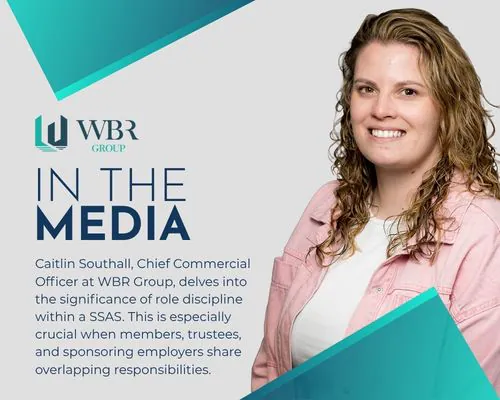
Good governance requires clear responsibilities and a reliable audit trail, writes Caitlin Southall
SSAS offer significant flexibility for directors of owner-managed businesses and entrepreneurial family groups, but that flexibility only works where governance is clear, roles are properly defined and trustee decisions are capable of standing up to scrutiny.
This is particularly important where SSAS assets, connected-party transactions or employer-related arrangements are involved, because poor role discipline can create compliance, tax and fiduciary risk.
In practice, the key distinction is between those who benefit from the scheme, those who make trustee decisions, those who carry out statutory reporting obligations, and those who provide professional support.
This separation matters because with a SSAS the same individual or company may appear in more than one capacity. For example, a director of the sponsoring employer may also be a member and trustee of the SSAS. Although the roles may overlap, each carries different duties and should be considered separately.
Members have an interest in the benefits provided by the scheme, but that does not amount to trustee authority. A member may wish to make a particular investment or access benefits in a particular way, but trustees must decide whether the request is permitted under the scheme’s governing documentation and relevant pensions legislation before action is taken.
Where members are also trustees, they must separate personal interests from duties owed to the scheme and its beneficiaries.
Trustees must act in accordance with the trust deed and rules, applicable legislation and fiduciary duties, and consider whether a proposed transaction is permitted, restricted and justifiable in the interests of beneficiaries.
This is particularly relevant where a conflict of interest may arise. A member and trustee who is also a director of the sponsoring employer may have an interest in the employer borrowing from the SSAS, purchasing an asset from it or entering into another connected-party arrangement.
That interest does not automatically prevent the transaction from being considered, but the trustees must approach the decision in their trustee capacity, ensure all relevant requirements are met and retain evidence that the transaction was assessed on appropriate commercial terms and by reference to the scheme’s interests.
Trustees have overall responsibility for the management and administration of the scheme. Their duties arise from trust law, fiduciary principles, pensions legislation, the scheme’s governing documentation and, where relevant, tax legislation.
They must act in the best interests of beneficiaries, use their powers for proper purposes, manage conflicts appropriately and exercise reasonable care and skill. Professional support can assist, but it does not remove the trustees’ accountability for decisions made on behalf of the scheme.
Trustees may delegate administrative tasks and appoint advisers or administrators, but delegation is a governance tool rather than a transfer of responsibility or liability. Trustees should understand what work is undertaken on their behalf, maintain appropriate oversight and keep a clear record of the basis on which decisions are made.
Call in the professionals
Some SSAS may also appoint a professional trustee, although this has not been a requirement since pensions simplification took effect on 6 April 2006 under the Finance Act 2004.
Where appointed, a professional trustee can provide experience, independent oversight and support with governance, compliance and trustee decision-making, particularly where transactions are complex or conflicts may arise. Their appointment does not replace the need for member trustees to understand their own duties and responsibilities.
The scheme administrator has a separate statutory role under the Finance Act 2004 and is responsible for key HMRC functions, such as registration, reporting, and providing required statutory information to members and HMRC.
A professional administrator may handle day-to-day work and checks, but trustees remain responsible for deciding whether a transaction should proceed and whether all requirements have been met.
The sponsoring employer is a distinct party. Although it may have a close relationship with trustees and members, particularly where the SSAS is established for directors or their families, the employer’s commercial interests must remain separate from the trustees’ responsibilities to the pension scheme.
Transactions involving the sponsoring employer therefore require careful review. Employer-related investments, such as loans, must be assessed against the specific requirements for registered pension schemes. Trustees should not assume a transaction is acceptable simply because all parties agree to it.
Professional advisers can support trustees on pensions, tax, legal, accounting and property matters, but they do not make trustee decisions. Trustees should understand the advice received, its scope and its limitations before recording how it informed the final decision.
Good governance requires clear responsibilities and a reliable audit trail. Trustee decisions should record the rationale, key considerations, conflicts and any professional advice obtained, particularly for complex or connected-party transactions.
The small size of a SSAS does not reduce the need for role clarity. The overlapping nature of member, trustee and employer roles actually make the need for a clear distinction more important. Each person should understand the capacity in which they are acting, the duties attached to that role and when the scheme’s interests must come first.
A well-governed SSAS is one where responsibilities are clearly defined, understood and evidenced through effective oversight and recordkeeping. Professional support can help trustees reach the right outcomes, but trustee understanding and accountability remain central to keeping the scheme compliant, defensible and well governed.
Caitlin Southall is Chief Commercial Officer at WBR Group